


From the dust-jacket:
Born in Wigan in 1901 and a childhood friend of George
Formby, who was later to become his chief rival, Frank
Randle was one of the
greatest music-hall comedians
of all time. His theatre career
started in 1916, when he
appeared as an acrobatic artist
under the name of Arthur
Twist. It was not until the
thirties, however, that he
achieved his greatest
popularity and notoriety as a
comedian whose wild, manic
temperament introduced a fresh note of invention into
popular entertainment. For ten years he ran his own touring
company, Randle's Scandals, playing to enthusiastic
audiences all over the country. He also made a number of
shoe-string movies and was the star of Blackpool's most
distinguished summer-season show. During the early fifties
his health declined and he died in Blackpool in 1957. Jeff
Nuttall's account of Frank Randle is both a portrait of a `very,
very funny man' and the story of
his own search as he pieced
that portrait together by talking
to Randle's acquaintances,
friends, colleagues and
relations. What emerges from
his narrative is a beautifully
recorded analysis of the ways in
which working-class values are
expressed in popular
entertainment and are thus
ritualised by it. The image
Nuttall builds of Randle also allows him to explore the
perennial theme of the clown as outsider and, with the
passing of Randle, he acknowledges the passing of a certain
naive optimism which Randle so expressively embodied.
The author
Jeff Nuttall, artist in sculpture, performance and words,
teaches in the Fine Art Department at Leeds Polytechnic. His
previous publications include Bomb Culture (MacGibbon and
Kee, 1968), a best- selling study of pop culture, and
Common Factors! Vulgar Factions (with Rodick Carmichael,
Routledge & Kegan Paul, 1977).
ISBN 0 7100 8977 5
REVIEW
Nuttall has a way of conveying more than the words of his
interviewees, he captures their attitudes and emotions too.
He fully reports their testimony in a journalistic way. Take this
for example:
"Blakely is sure that Randle was born in Wigan. He
was always a gentleman offstage, quiet, reserved.
'We never saw any evidence of wild behaviour.
Never too drunk to work. Always a glass in his hand
but certainly not alcoholic. Do you remember, dear?
Mind you, he would disappear for days. No
warning. Just turn up at the studios at 8 o'clock and
no Randle.' Where did he go? Who knows?
Possible mental blackouts, fits of depression.
Possible benders with Joe Locke. Did I know that
Randle and Joe Locke were friendly? I would do
well to contact Joe Locke. Those strained
fragments from light opera I remember wafting from
the wartime wireless sort uneasily with the idea of
two- and three-day benders. And there was maybe a
girlfriend somewhere. Tom and his wife exchange
smiles. 'But he had a lovely house, you know, in
Whitegate Drive, Blackpool, and a lovely wife,
Queenie. We loved Queenie, didn't we dear?'
Writing in the first person, Nuttall manages to snare the
reader into his quest:
"I put ads in the Stage and write a letter to the
Guardian. A lot of ringing around after Locke, Nat
Jackley, Sandy Powell, Tessie O'Shea, Diana Dors
has got me next to nowhere. BBC, agencies, theatre
managements, by some long-established
freemasonry of the profession, protect the privacy
of entertainers, even long-retired entertainers, as
savagely as they would protect their own progeny."
And what Nuttall can't discern from evidence, he concludes
using his intuition; for instance, how could he have know
what Randle felt like, without so much empathy?:
"He lived the life of a Munchausen, joined the
Bispham hunt and fell off the horse at the first
canter, appeared, none the less. in hunting pink for
dinner with Joseph Locke and his wife at Craig
Royston. On such occasions he was the grand
actor. An invisible astrakhan collar was about his
neck, an imaginary sombrero on his head, a silver-
knobbed cane near visible in his hand."
His use of adjective also makes the story spring to life; note
the use of the word 'diabolic' - a strange choice, but
conjouring up all manner of riotous goings-on...
With Locke, the stentorian Irish tenor to whom love
descended like a nangellah twice nightly, and Percy
Taylor who ran the local taxi-fleet, he formed a
diabolic liaison. Locke, a capable man with the
bottle and an eager man with his fists, was a
familiar figure among the race-track professors and
the bill-shuffling brotherhood of the Fylde half-
world.
Nuttall really got under the skin of Randle, tried to discern
what motivated him, make sense of his attitude. We can
make our own conclusions, but I think Nuttall's is very
perceptive:
"Together he and Randle resolved that their way of
life had nothing to do with income tax. It was part
Wigan guttersnipe and part regent that went down
to the office after second house on Saturday night
and collected anything between a hundred pounds
and a thousand pounds in 'readies'. With Locke he
was the libertine drunk, the tap-room roarer, whilst
for the Blakelys he could be quietly spoken, even
timid, and for friends and family he could be the
nicest bloke in the world.
It was with Locke that he conducted his most direct
foray against the managerial class, the promoters
and entrepreneurs, and the South. Because even
though Queenie and her ma might want it, as they
wanted him to become Roman Catholic, and even
though he himself might want it as he glimpsed
those levels of gentility which Rhoda had always
symbolised, he knew that he could never join
whole-heartedly the sophisticates of the South. It
would cost him a crown he already had and the
endless tolerance that went with it. Out of the mill
he may be, and not just forgiven but loved for it.
But he must keep it quite clear to those who
struggled behind in the soot and the grime that he
hadn't joined the other side, the gaffers and the
toffee noses.
Sometimes, Nuttall's words conjour up a picture so vivid, it's
like being there; note the crisps anecdote:
And there were the times when Randle, the
amateur, the Wigan alley lad, would re-affirm his
grasp on his fundamental identity by skiving off for
days at a time, leaving film sets idle and touring
companies wildly improvising, while he and Jo
Locke roistered round the cool tap-'oiles of some
undetectable Pennine hostelry, or else, alone, he
zapped his currently unbuckled sports model up to
Cumberland where he would spend days with a
comfortable level of ale in him, throwing crisps to
chickens over some lichen-covered five-bar gate.”
And being a warts-and-all biography, Nuttall has to tell it like
it is:
It may have been a resentment of Formby lingering
from the King Fun days. Nevertheless, whether
Formby as guest of honour was the cause or not,
large quantities of booze turned Randle and Locke.
the old firm of iconoclasts, into a couple of whirling
dynamos who, in turn, transformed Jimmy
Brennan's Lytham hotel, the site of the celebration,
into a Mack Sennett set. Despite the caviar
dribbling down the regency-stripe wallpaper, icy
smiles were accomplished and hush-hush gestures
to press and police, were immediately effective.
Conclusion: A wonderful work on many planes; as a portrait
of the man, it is quite startling. It also captures a feel for the
attitudes and mores of the time, and also of the northern
situation generally. It is beautifully crafted, actually, and
combines elements of mystery and comedy. If you can
borrow a copy, you won't regret it.
Peter Lee
Extracts and illustrations for review purposes only. All
copyrights acknowledged. Review c. P.Lee 1998
King Twist: a review

INTRODUCTION
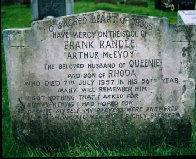
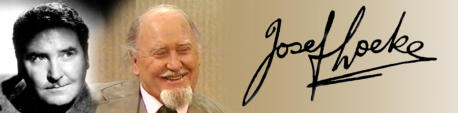
The Lancashire comedian Frank Randle and Josef Locke
would seem like an unlikely pair to form a friendship, but in
their own right each was a superstar of the age; they would
have felt the same pressures and held the same attitudes to
their talent.
In 1977 Leeds Poly lecturer Jeff Nuttall set of an odyssey to
track down the real Frank Randle. His book, King Twist, is
now long out of print. Here's a brief review, which sheds light
on both Frank and Josef.

Bowled over by a lad from County Durham
In 1954 when I was aged 10 my mother took me to
Blackpool for a holiday. One afternoon about 6pm we were
making our way along the Golden Mile on our way to see a
Variety show.
Fortunately, or unfortunately, for me I was not looking
where I was going and was knocked to the ground as I
walked into a man.
He bent over to assist me getting up and at the same time
he was dusting me down with a hankerchief. My mother
recognised him right away it was Frank Randle. He was
dressed in a suit and he had a wonderful head of wavy
silver grey hair. My mother got him to sign a cigarette
packet as neither of them had a peice of paper.
He apologised for walking in to me and said he was
hurrying as not to be late for the show he was starring in.
Unfortunately I was knocked down. Fortunately I got to
speak with Frank Randle. Great!
The following day my mother and I were looking around
the shops and when I turned this particular corner I
bumped into a little boy and knocked him to the ground,
my mother helped him to his feet and was apologising on
my behalf.
The 'little boy 'turned out to be Jimmy Clitheroe. He smiled
at me and said, I wish I was as tall as you, cheerio and
then walked off.
I bet there are not many people who can say they have
been knocked down by Frank Randle and have knocked
down Jimmy Clitheroe!
ABOVE - Allan is pictured back row, third from the right in
the picture above.
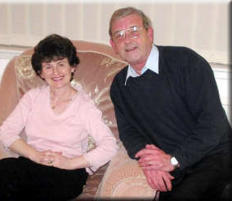
I took early retirement
in 2001 after working in
local government. I live
in Sunderland Tyne &
Wear and I am married
to Elizabeth who is a
school teacher. I was
born at Wheatley Hill in
County Durham that
used to be a coal
mining village.
My mother took me to
Blackpool every year
for a holiday, it was either in the summer, or for the
illuminations in the Autumn.
The pay for coal miner then was so very little that most of
the miners and their families could not afford a holiday.
My Mam would get some of the people of the village to go
to Blackpool only a few could afford it, I think it was the
families that had a large family and they all worked down
the coal mine were the ones who had a little money and
could afford to go on holiday
My mam would organise the bus and the guest house and
in return would receive free transport to Blackpool and free
lodgings


While not strictly related to Josef, this striking story
from Allan Fulcher is worth sharing, particularly given
that both Frank Randle and Jimmy Clitheroe were
contempories of Josef, and were also major
attractions on the Blackpool scene..
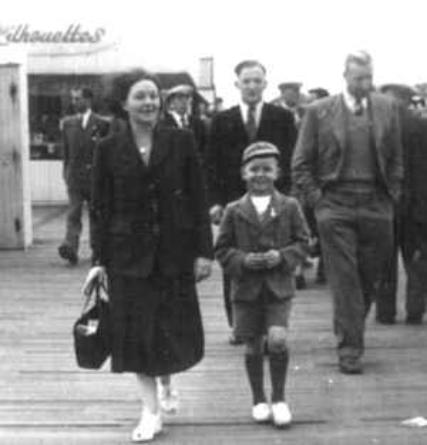
Pictured above left is Allan and his mum
on the pier at Blackpool, and on the right
with a smashing bike; he's wearing a
'Jimmy Clitheroe' type hat as well...


From the dust-jacket:
Born in Wigan in 1901 and a childhood friend of George
Formby, who was later to become his chief rival, Frank
Randle was one of the greatest music-hall comedians of all
time. His theatre career started in 1916, when he appeared
as an acrobatic artist under
the name of Arthur Twist. It
was not until the thirties,
however, that he achieved his
greatest popularity and
notoriety as a comedian
whose wild, manic
temperament introduced a
fresh note of invention into
popular entertainment. For ten
years he ran his own touring
company, Randle's Scandals, playing to enthusiastic
audiences all over the country. He also made a number of
shoe-string movies and was the star of Blackpool's most
distinguished summer-season show. During the early fifties
his health declined and he died in Blackpool in 1957. Jeff
Nuttall's account of Frank Randle is both a portrait of a `very,
very funny man' and the story of his own search as he
pieced that portrait together by talking to Randle's
acquaintances, friends, colleagues and relations. What
emerges from his narrative is a beautifully recorded analysis
of the ways in which working-
class values are expressed in
popular entertainment and are
thus ritualised by it. The image
Nuttall builds of Randle also
allows him to explore the
perennial theme of the clown as
outsider and, with the passing of
Randle, he acknowledges the
passing of a certain naive
optimism which Randle so
expressively embodied.
The author
Jeff Nuttall, artist in sculpture, performance and words,
teaches in the Fine Art Department at Leeds Polytechnic. His
previous publications include Bomb Culture (MacGibbon and
Kee, 1968), a best- selling study of pop culture, and
Common Factors! Vulgar Factions (with Rodick Carmichael,
Routledge & Kegan Paul, 1977).
ISBN 0 7100 8977 5
REVIEW
Nuttall has a way of conveying more than the words of his
interviewees, he captures their attitudes and emotions too.
He fully reports their testimony in a journalistic way. Take this
for example:
"Blakely is sure that Randle was born in Wigan. He
was always a gentleman offstage, quiet, reserved.
'We never saw any evidence of wild behaviour.
Never too drunk to work. Always a glass in his hand
but certainly not alcoholic. Do you remember, dear?
Mind you, he would disappear for days. No
warning. Just turn up at the studios at 8 o'clock and
no Randle.' Where did he go? Who knows?
Possible mental blackouts, fits of depression.
Possible benders with Joe Locke. Did I know that
Randle and Joe Locke were friendly? I would do
well to contact Joe Locke. Those strained
fragments from light opera I remember wafting from
the wartime wireless sort uneasily with the idea of
two- and three-day benders. And there was maybe a
girlfriend somewhere. Tom and his wife exchange
smiles. 'But he had a lovely house, you know, in
Whitegate Drive, Blackpool, and a lovely wife,
Queenie. We loved Queenie, didn't we dear?'
Writing in the first person, Nuttall manages to snare the
reader into his quest:
"I put ads in the Stage and write a letter to the
Guardian. A lot of ringing around after Locke, Nat
Jackley, Sandy Powell, Tessie O'Shea, Diana Dors
has got me next to nowhere. BBC, agencies, theatre
managements, by some long-established
freemasonry of the profession, protect the privacy
of entertainers, even long-retired entertainers, as
savagely as they would protect their own progeny."
And what Nuttall can't discern from evidence, he concludes
using his intuition; for instance, how could he have know
what Randle felt like, without so much empathy?:
"He lived the life of a Munchausen, joined the
Bispham hunt and fell off the horse at the first
canter, appeared, none the less. in hunting pink for
dinner with Joseph Locke and his wife at Craig
Royston. On such occasions he was the grand
actor. An invisible astrakhan collar was about his
neck, an imaginary sombrero on his head, a silver-
knobbed cane near visible in his hand."
His use of adjective also makes the story spring to life; note
the use of the word 'diabolic' - a strange choice, but
conjouring up all manner of riotous goings-on...
With Locke, the stentorian Irish tenor to whom love
descended like a nangellah twice nightly, and Percy
Taylor who ran the local taxi-fleet, he formed a
diabolic liaison. Locke, a capable man with the
bottle and an eager man with his fists, was a
familiar figure among the race-track professors and
the bill-shuffling brotherhood of the Fylde half-
world.
Nuttall really got under the skin of Randle, tried to discern
what motivated him, make sense of his attitude. We can
make our own conclusions, but I think Nuttall's is very
perceptive:
"Together he and Randle resolved that their way of
life had nothing to do with income tax. It was part
Wigan guttersnipe and part regent that went down
to the office after second house on Saturday night
and collected anything between a hundred pounds
and a thousand pounds in 'readies'. With Locke he
was the libertine drunk, the tap-room roarer, whilst
for the Blakelys he could be quietly spoken, even
timid, and for friends and family he could be the
nicest bloke in the world.
It was with Locke that he conducted his most direct
foray against the managerial class, the promoters
and entrepreneurs, and the South. Because even
though Queenie and her ma might want it, as they
wanted him to become Roman Catholic, and even
though he himself might want it as he glimpsed
those levels of gentility which Rhoda had always
symbolised, he knew that he could never join
whole-heartedly the sophisticates of the South. It
would cost him a crown he already had and the
endless tolerance that went with it. Out of the mill
he may be, and not just forgiven but loved for it.
But he must keep it quite clear to those who
struggled behind in the soot and the grime that he
hadn't joined the other side, the gaffers and the
toffee noses.
Sometimes, Nuttall's words conjour up a picture so vivid, it's
like being there; note the crisps anecdote:
And there were the times when Randle, the
amateur, the Wigan alley lad, would re-affirm his
grasp on his fundamental identity by skiving off for
days at a time, leaving film sets idle and touring
companies wildly improvising, while he and Jo
Locke roistered round the cool tap-'oiles of some
undetectable Pennine hostelry, or else, alone, he
zapped his currently unbuckled sports model up to
Cumberland where he would spend days with a
comfortable level of ale in him, throwing crisps to
chickens over some lichen-covered five-bar gate.”
And being a warts-and-all biography, Nuttall has to tell it like
it is:
It may have been a resentment of Formby lingering
from the King Fun days. Nevertheless, whether
Formby as guest of honour was the cause or not,
large quantities of booze turned Randle and Locke.
the old firm of iconoclasts, into a couple of whirling
dynamos who, in turn, transformed Jimmy
Brennan's Lytham hotel, the site of the celebration,
into a Mack Sennett set. Despite the caviar
dribbling down the regency-stripe wallpaper, icy
smiles were accomplished and hush-hush gestures
to press and police, were immediately effective.
Conclusion: A wonderful work on many planes; as a portrait
of the man, it is quite startling. It also captures a feel for the
attitudes and mores of the time, and also of the northern
situation generally. It is beautifully crafted, actually, and
combines elements of mystery and comedy. If you can
borrow a copy, you won't regret it.
Peter Lee
Extracts and illustrations for review purposes only. All
copyrights acknowledged. Review c. P.Lee 1998
King Twist: a review
INTRODUCTION
The Lancashire comedian Frank Randle and Josef Locke
would seem like an unlikely pair to form a friendship, but in
their own right each was a superstar of the age; they would
have felt the same pressures and held the same attitudes
to their talent.
In 1977 Leeds Poly lecturer Jeff Nuttall set of an odyssey to
track down the real Frank Randle. His book, King Twist, is
now long out of print. Here's a brief review, which sheds
light on both Frank and Josef.
Bowled over by a lad
from County Durham
In 1954 when I was aged 10 my mother took me to
Blackpool for a holiday. One afternoon about 6pm we were
making our way along the Golden Mile on our way to see a
Variety show.
Fortunately, or unfortunately, for me I was not looking
where I was going and was knocked to the ground as I
walked into a man.
He bent over to assist me getting up and at the same time
he was dusting me down with a hankerchief. My mother
recognised him right away it was Frank Randle. He was
dressed in a suit and he had a wonderful head of wavy
silver grey hair. My mother got him to sign a cigarette
packet as neither of them had a peice of paper.
He apologised for walking in to me and said he was
hurrying as not to be late for the show he was starring in.
Unfortunately I was knocked down. Fortunately I got to
speak with Frank Randle. Great!
The following day my mother and I were looking around
the shops and when I turned this particular corner I
bumped into a little boy and knocked him to the ground,
my mother helped him to his feet and was apologising on
my behalf.
The 'little boy 'turned out to be Jimmy Clitheroe. He smiled
at me and said, I wish I was as tall as you, cheerio and
then walked off.
I bet there are not many people who can say they have
been knocked down by Frank Randle and have knocked
down Jimmy Clitheroe!
ABOVE - Allan is pictured back row, third from the right.
I took early retirement in
2001 after working in local
government. I live in
Sunderland Tyne & Wear and
I am married to Elizabeth
who is a school teacher. I
was born at Wheatley Hill in
County Durham that used to
be a coal mining village.
My mother took me to
Blackpool every year for a
holiday, it was either in the summer, or for the illuminations
in the Autumn.
The pay for coal miner then was so very little that most of
the miners and their families could not afford a holiday.
My Mam would get some of the people of the village to go
to Blackpool only a few could afford it, I think it was the
families that had a large family and they all worked down
the coal mine were the ones who had a little money and
could afford to go on holiday
My mam would organise the bus and the guest house and
in return would receive free transport to Blackpool and free
lodgings
While not strictly related to Josef, this striking story
from Allan Fulcher is worth sharing, particularly given
that both Frank Randle and Jimmy Clitheroe were
contempories of Josef, and were also major
attractions on the Blackpool scene..
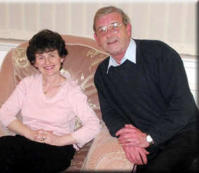
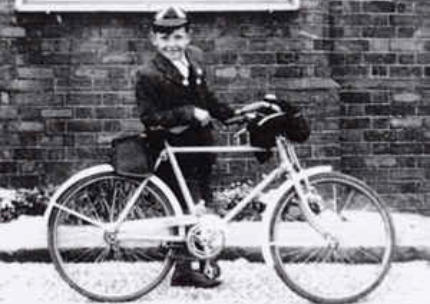
Pictured above is Allan and his mum on the pier at
Blackpool, and below with a smashing bike; he's wearing a
'Jimmy Clitheroe' type hat as well...

